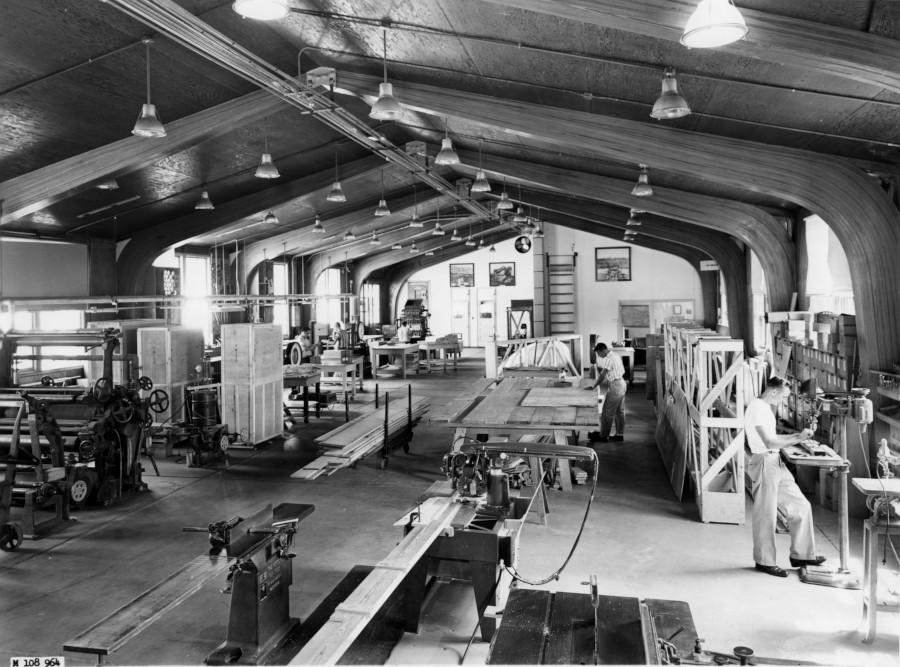
The interior of the Forest Products Lab building, showing the original glulam arches (source: Forest History Society).
by Ricardo Brites, PhD Eng°, Director of Engineering & VDC
We like to think of mass timber as a modern breakthrough. The truth is, long before the first CLT panel came off a press or the first glulam beam rose into a skyline, the foundations of engineered timber were already being laid. The quiet rise of mass timber would become one of the most consequential shifts in construction.
Where It Started
The story begins in Europe more than a century ago. In the early 1900s, a German carpenter named Otto Hetzer began laminating small pieces of wood together to form remarkably strong, stable beams. His 1901 patent for straight laminated beams – and a subsequent 1906 patent for curved laminations – marked the start of what we know today as glulam. It was simple, elegant engineering: align the grain, remove the defects, and build something stronger than the sum of its parts.
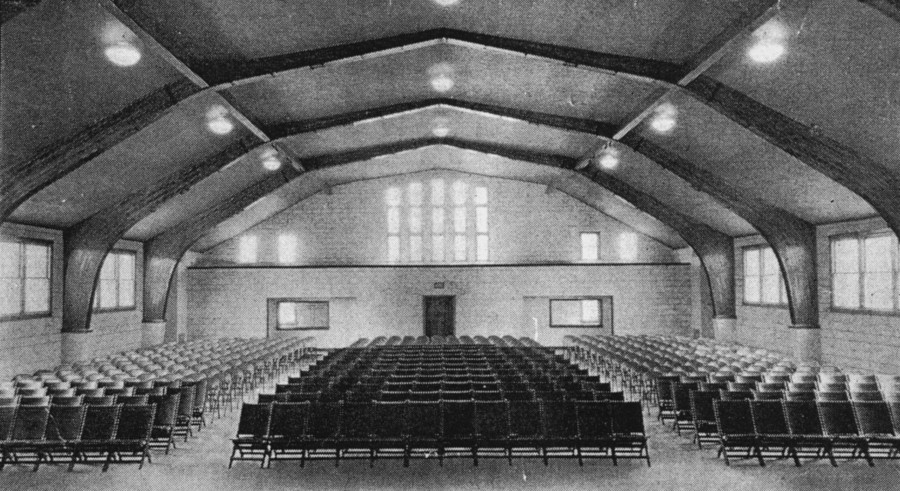
Glulam (glue-laminated timber) was born, and with it, the idea that timber could be engineered and not just harvested. Through the decades that followed, innovations in structural adhesives, machine grading, and manufacturing allowed glulam to scale into long-span roofs, sports halls, and civic buildings and public works around the world.
- 1930s–1950s: Adoption of glulam in long-span structures (e.g., aircraft hangars, sports facilities). Shows timber’s proven track record under real loads.
- 1960s–1980s: Development of structural adhesives and standardized grading systems. These advances made modern glulam and, eventually, CLT possible.
- 1990s–2000s: The rise of CNC and 3-axis fabrication unlocked greater precision, tolerances, and opportunity for hybrid systems.
Modern Timber Takes Shape
Fast-forward to the 1990s, and another turning point arrived. In Austria and Germany, engineers and researchers were searching for new ways to support rural economies, add value to abundant forest resources, and solve the design challenges that solid-sawn lumber couldn’t. Their answer was cross-lamination.
They began layering boards at right angles, pressing them with advanced adhesives, and testing them rigorously. This marked the birth of modern cross-laminated timber (CLT). A key figure in this shift was Gerhard Schickhofer, whose doctoral work in the mid-’90s laid much of the scientific foundation of CLT. By 2002, Austria had formalized those breakthroughs into national construction guidelines, helping to cement CLT as a structural material.
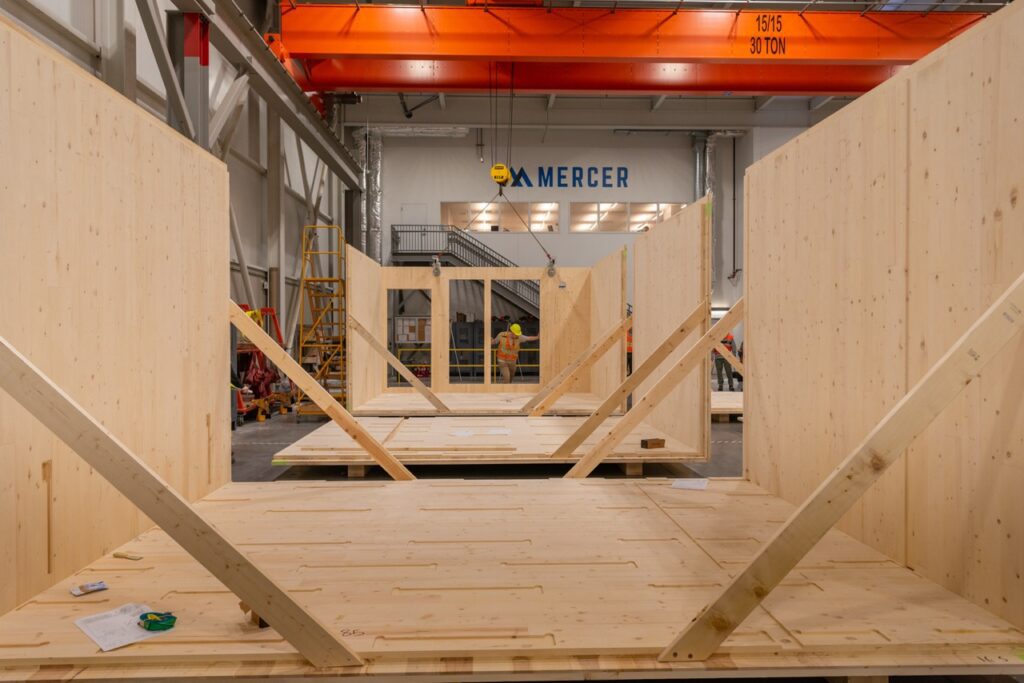
Advances in CNC machining and digital modeling soon followed, allowing panelized systems to achieve new levels of precision, consistency, and complexity. A new era of timber engineering had arrived.
Crossing the Atlantic
Within a decade, CLT and glulam systems spread across Europe. Then, they crossed the Atlantic. North America watched closely. Early pilot projects, supported by extensive fire and structural testing through organizations like FPInnovations, NIST, and APA, helped prove mass timber’s safety and reliability.
By 2015, CLT was formally incorporated into the International Building Code (IBC) under mass timber categories, unlocking broader adoption and investment. Then came the watershed moment: the 2021 IBC “Tall Mass Timber” provisions. Types IV-A, IV-B, and IV-C opened the door to timber buildings up to 18 stories in many jurisdictions. Standards such as PRG 320 brought clarity and consistency to panel manufacturing.
What had once been experimental, now became commercially viable.
Why the History Matters Now
Buildings are responsible for nearly 40% of global CO₂ emissions. Material choices matter more than ever. Mass timber offers something no other structural material can: the ability to store carbon rather than emit it.
Every panel locks in atmospheric carbon absorbed during tree growth. Every project reduces the embodied emissions that would otherwise come from carbon-intensive concrete or steel. And every prefabricated installation cuts on-site energy use, water, traffic, and waste, shrinking the environmental footprint from day one.
But the climate case is only part of the story.
Mass timber doesn’t just lower emissions. It creates a pathway to net-zero construction that’s scalable, repeatable, and rooted in natural systems that get stronger with responsible use.
The last decade has seen a convergence of factors driving mass timber forward:
- Performance: predictable structural behavior, inherent fire resistance through charring, and reliable acoustic solutions.
- Codes and policy: Buy Clean (US) legislation, embodied-carbon disclosure requirements, and new local code pathways.
- Economics: compressed schedules, fewer trades on-site, and repeatable systems that improve install efficiency.
- Forest advancements: sustainably managed working forests and global certification systems that ensure renewable fiber supply.
Today, mass timber stands alongside steel and concrete not as a replacement, but as a partner: a material that strengthens hybrid systems, accelerates schedules, reduces carbon, and expands design possibilities.
Looking Ahead
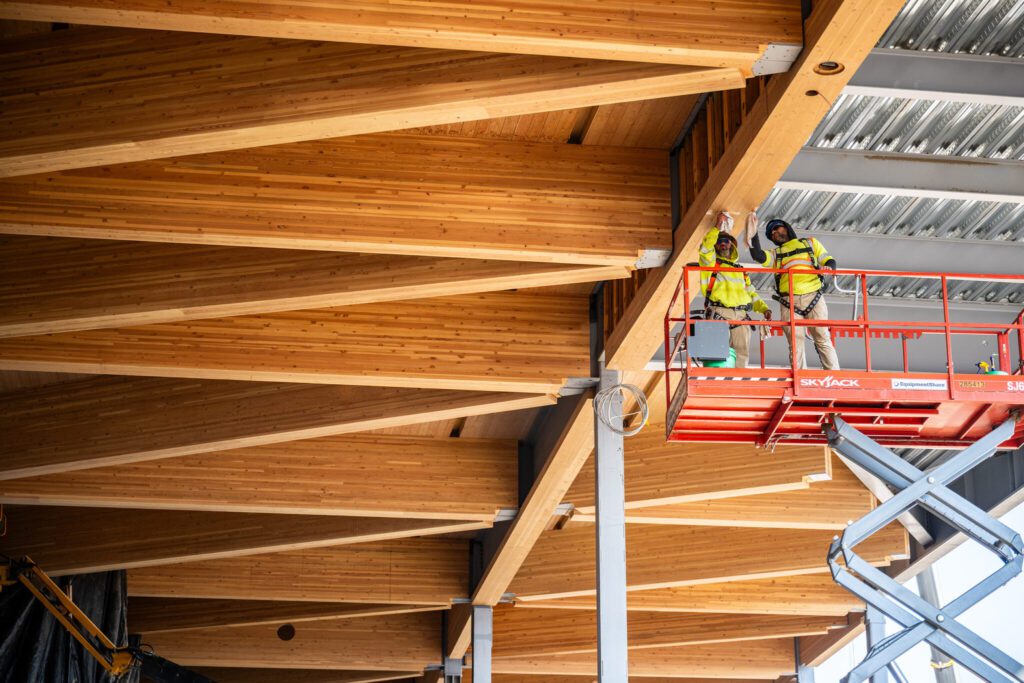
Mass timber now sits at the center of the largest evolutions in building design since the advent of structural steel. The innovations of Hetzer, Schickhofer, and generations of engineers and fabricators didn’t just bring a new product to market. They’ve reshaped expectations of what construction can achieve. They helped set in motion what many are calling the third industrial revolution in construction.
The next decade will bring new hybrid assemblies, expanded regional manufacturing, digital-twin workflows, refined LOD frameworks, improved adhesives, and more performance-based fire design. In other words, the story is just getting started.